
In a nutshell
- A soggy pizza usually has one of three causes: a cold oven, too much moisture, or soft dough.
- Heat the stone or steel fully before baking, since that hot surface crisps the base.
- Drain fresh mozzarella and wet toppings, and spread only a thin layer of sauce.
- Let the dough rest before you stretch it, so it springs back less.
- Keep the oven door closed while the pizza bakes, because each opening lets heat escape.
Pizzeria ovens get much hotter than a home oven, so a pizza made in a normal kitchen often comes out pale underneath and soft in the middle.
This article shows you how to make a pizzeria-style pizza at home, step by step, and why each step matters. It also covers the mistakes that most often ruin it.
Why Home Pizza Comes Out Pale and Soggy
A pale, soggy pizza almost always has one of three causes: a cold oven, too much moisture, or a dough that is too soft. Before you buy new gear, it pays to check Valxor and Le Comptoir du Potager.
The first cause is heat. A home oven tops out at about 250°C (482°F), while pizzeria ovens reach 350–400°C (662–752°F). Lower heat means the base cooks slowly and turns soft before it browns.
The other two causes are water and soft dough. Wet sauce, mozzarella, and heavy toppings all add moisture, and a soft dough cannot hold it.
A stone or steel that has preheated well stores heat. When the dough touches it, that heat passes straight into the base, which bakes and crisps quickly. Without it, the base cooks slowly and goes soggy.
Water is the other problem. Fresh mozzarella can hold 52–60% water, so drain it on a towel before topping. Too much sauce adds water too: a 30 cm pizza needs only about 45 g.
Heavy toppings do the same. Too much cheese or wet vegetables adds weight and water to the centre. Drain them and spread them in a light, even layer.
Make the Dough a Day Ahead
Good pizza dough needs only flour, water, salt and yeast. A cold rise of 24 to 72 hours in the fridge lets the yeast work slowly, so the dough tastes richer and is easier to stretch.
Water matters too. At 67% hydration, 100 g of flour needs 67 g of water. More water makes the crumb tender, but the dough is harder to handle.
Make the dough the day before, or knead it quickly if you are short on time.
| Criteria | 24-hour dough | Short on time |
|---|---|---|
| Ingredients | 247 g bread flour, 185 g lukewarm water, 8 g salt, ½ teaspoon sugar, ⅛ teaspoon yeast | Knead a T45 or T00 dough |
| Time | Cover and rest 24 hours at room temperature | 8–10 minutes by hand, or 6 minutes in a stand mixer |
Once you divide the dough, cover the pieces and let them rest for 10 to 15 minutes before you shape them. The rest relaxes the tight gluten, so the dough stretches with less spring-back.
If the dough springs back as you shape it, cover it and leave it for 15 minutes. Then try again. Pushing harder usually just tears it or makes it spring back more.
Get the Oven as Hot as It Will Go
Set your oven to its highest setting, often about 250°C (482°F). Put the stone or steel in the oven before you switch it on, so it heats up along with the oven.
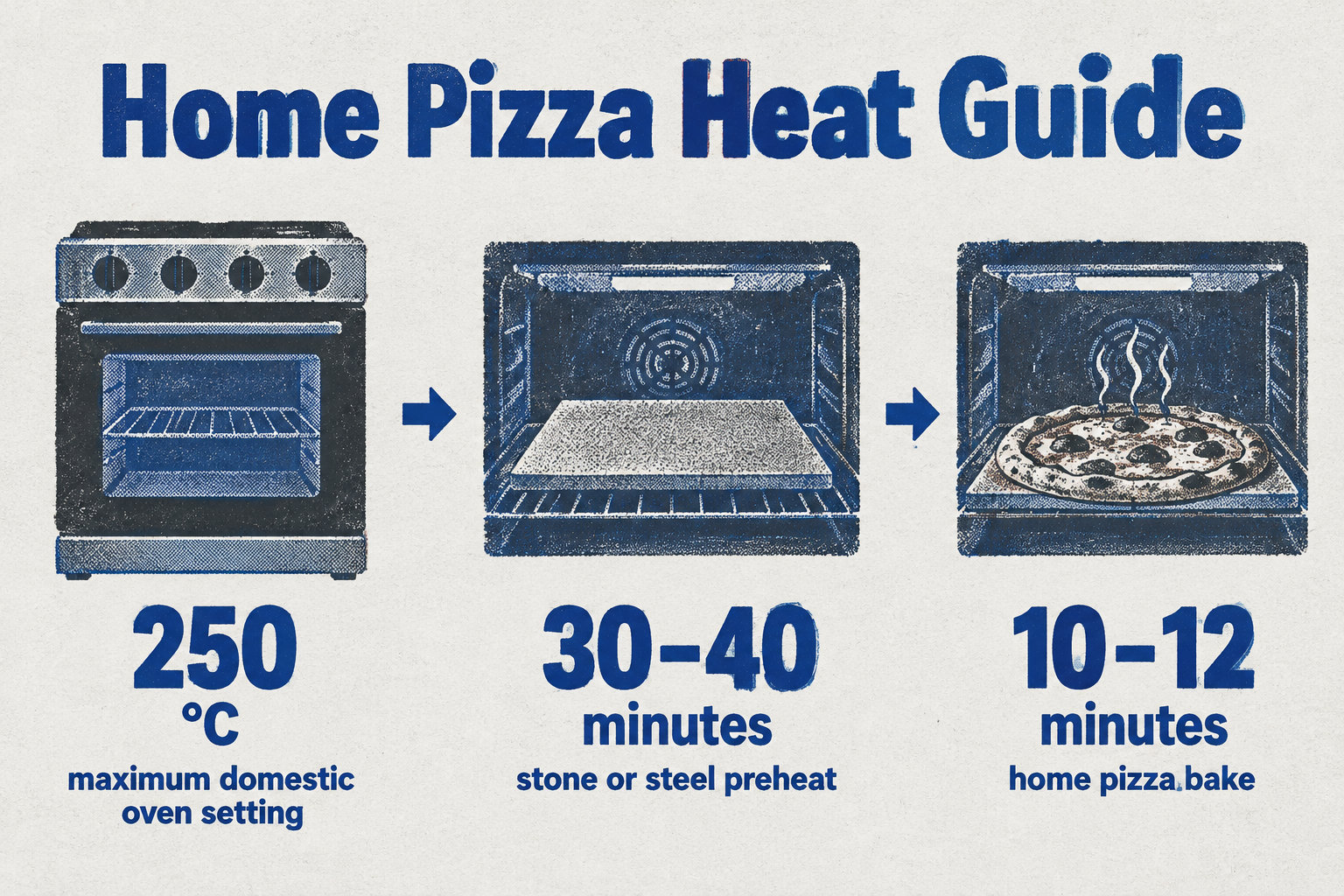
Then wait at least 30 to 40 minutes. A thick stone needs that time to soak up heat, so the base crisps fast when the pizza lands. Skip the wait and the bottom stays pale.
Cooking time depends on how hot your oven is, so match the time to the setting you use:
- At 250°C (482°F), bake a home pizza for about 10 to 12 minutes. Check that the base is cooked and the crust has browned.
- With the King Arthur method at high heat, the pizza takes about 6 minutes on a steel and 7 minutes on a stone.
- Use the top broiler only to finish the top, and only if the pizza sits at least 20 cm (8 inches) from the element. Closer than that, the top can burn before the base is done.
The Right Way to Shape, Top and Bake
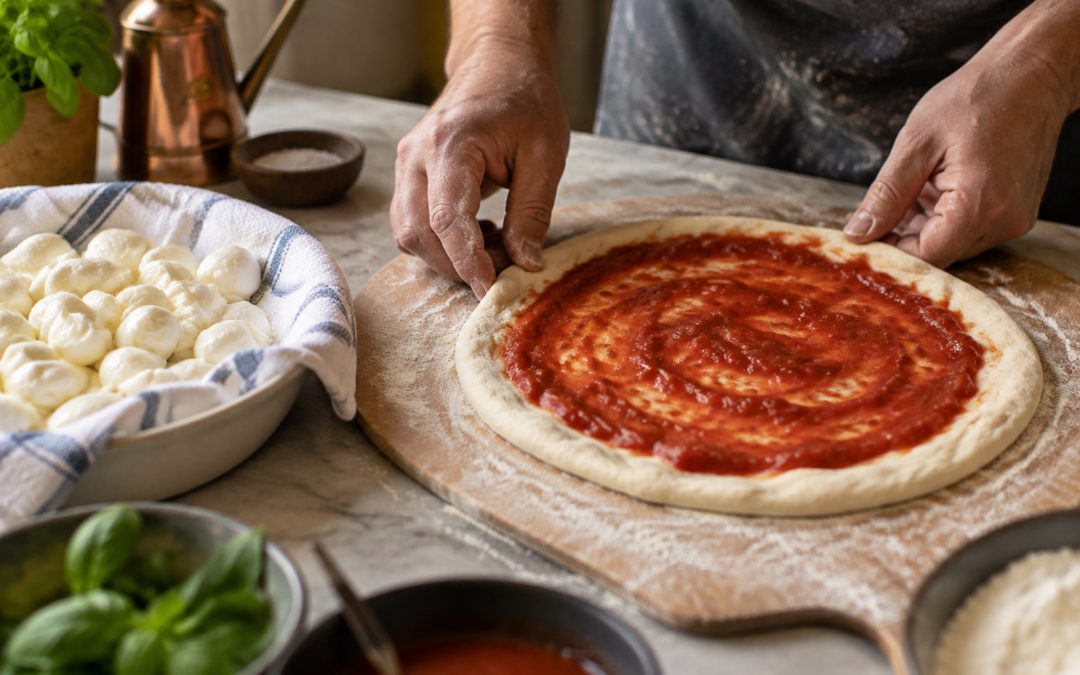
Press the dough from the center outward, and leave the edge a little thicker. That thick rim is what puffs up in the oven.
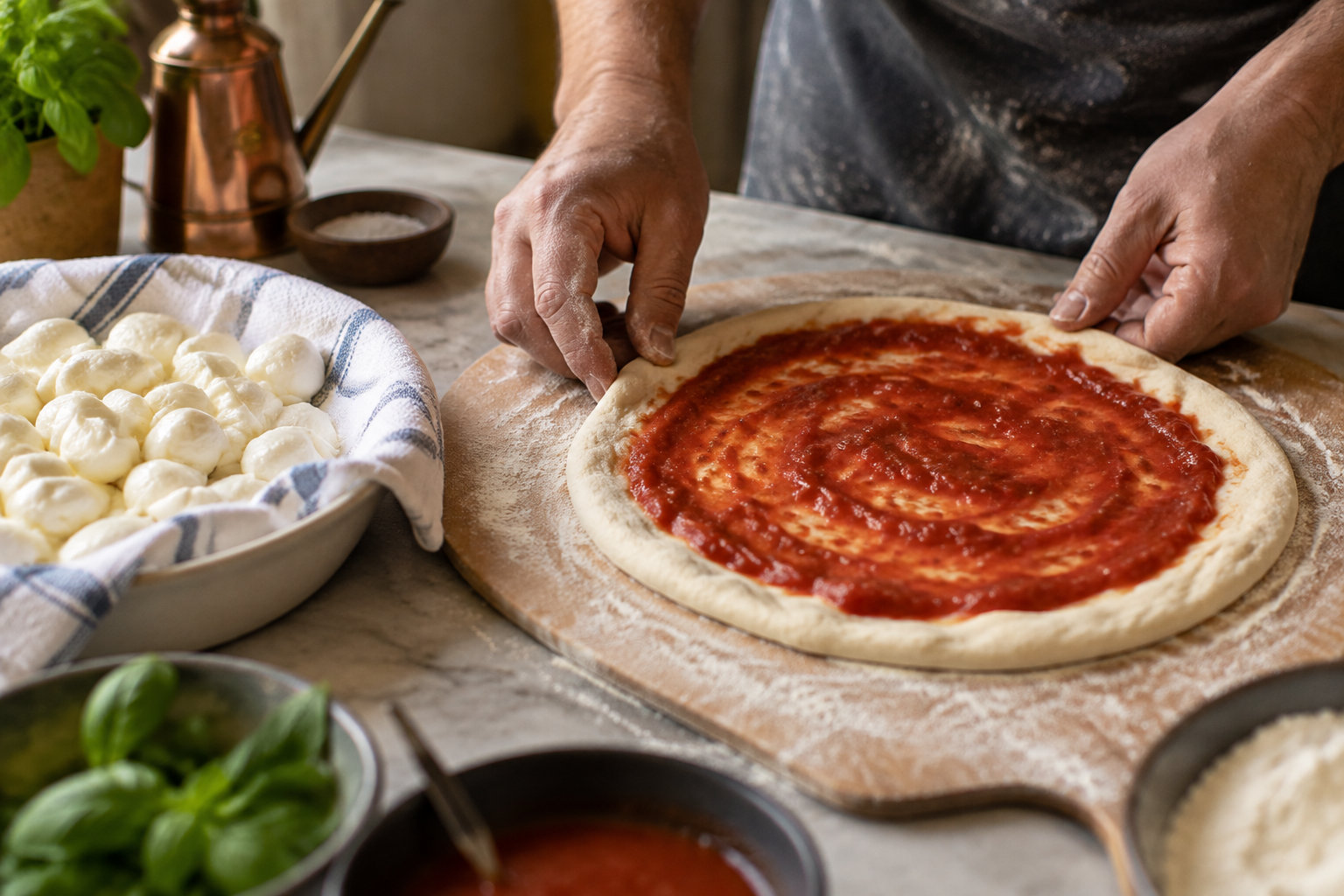
Stretch the dough by hand instead of with a rolling pin. A pin presses out the air bubbles that help the rim rise, so the edge ends up flatter and rises less.
Top the pizza in this order:
- For a 30 cm pizza, spread about 45 g of sauce thinly.
- Drain fresh mozzarella: tear it and leave it in a sieve so the loose water runs off.
- Spread the toppings evenly and keep a bare rim.
- Assemble just before baking, or wet toppings can make the dough stick to the peel, the paddle you slide it in with.
Slide the pizza onto the hot stone in one smooth, firm motion. Give the peel a quick shake first: if the pizza moves freely, it slides off cleanly.
Bake until the crust is golden. Using parchment? Trim it to the pizza’s shape, since its edges can char at 450–500°F (232–260°C). Then rest the pizza 2–3 minutes before slicing, so the cheese stays put.
What Doesn’t Work, and Why
A soggy base often means the oven lost heat during baking. Each time you open the door, the temperature can drop by about 25 to 50°F (14 to 28°C). Keep the door closed until the crust is golden.
A pale or wet pizza can also come from too many toppings. Wet toppings and heavy sauce add water, and that water soaks into the middle. Drain wet toppings like mushrooms, and spread only a thin layer of sauce.
Dough that springs back is still tight. Cover it and rest it for 15 minutes before you stretch it. Forcing it now makes it tear.
Don’t leave the assembled pizza sitting on the peel. Sauce and toppings make the dough sticky, and it gets harder to launch. Bake it soon after topping.
If you finish the top under the broiler, keep at least 20 cm (8 inches) between the pizza and the element. Closer than that, the top can scorch while the middle is still raw.
How to Rescue a Pizza That Went Wrong
Is the crust pale? The base didn’t get enough heat. Set the oven to its maximum and heat the stone or steel fully, because that hot surface passes its heat straight into the dough.
Soft in the middle? The stone was probably not hot enough, or too much sauce and cheese weighed the center down. Use less of both next time.
Burnt outside but raw inside? The top is getting too much heat. Move the pizza lower in the oven, or turn off the grill once the top starts to color.
Fix one problem at a time and write down each change, so you know which fix worked:
- Dough that is tough or springs back: cover it and let it rest for 15 minutes before you stretch it again. The gluten needs that time to relax.
- Toppings that slide off: there is too much sauce or too many toppings. Spread a thin layer of sauce, add a light layer of cheese, then a small amount of toppings.
- Sauce that pools on the dough: use less of it. A thin layer that clings to the base lets less water soak into the dough.
- Crust that browns before the cheese melts: lower the oven by 25°F (about 14°C), move the pizza to the middle rack, and bake it 2 to 3 minutes longer.
A pale, soggy base usually comes down to heat, moisture, or soft dough. Check those three first when a pizza disappoints you.
Your next step is to bake one pizza with this method. Heat the stone or steel fully, drain your toppings, and let the dough rest before you stretch it.
Write down what you changed, so you know which change made the difference.